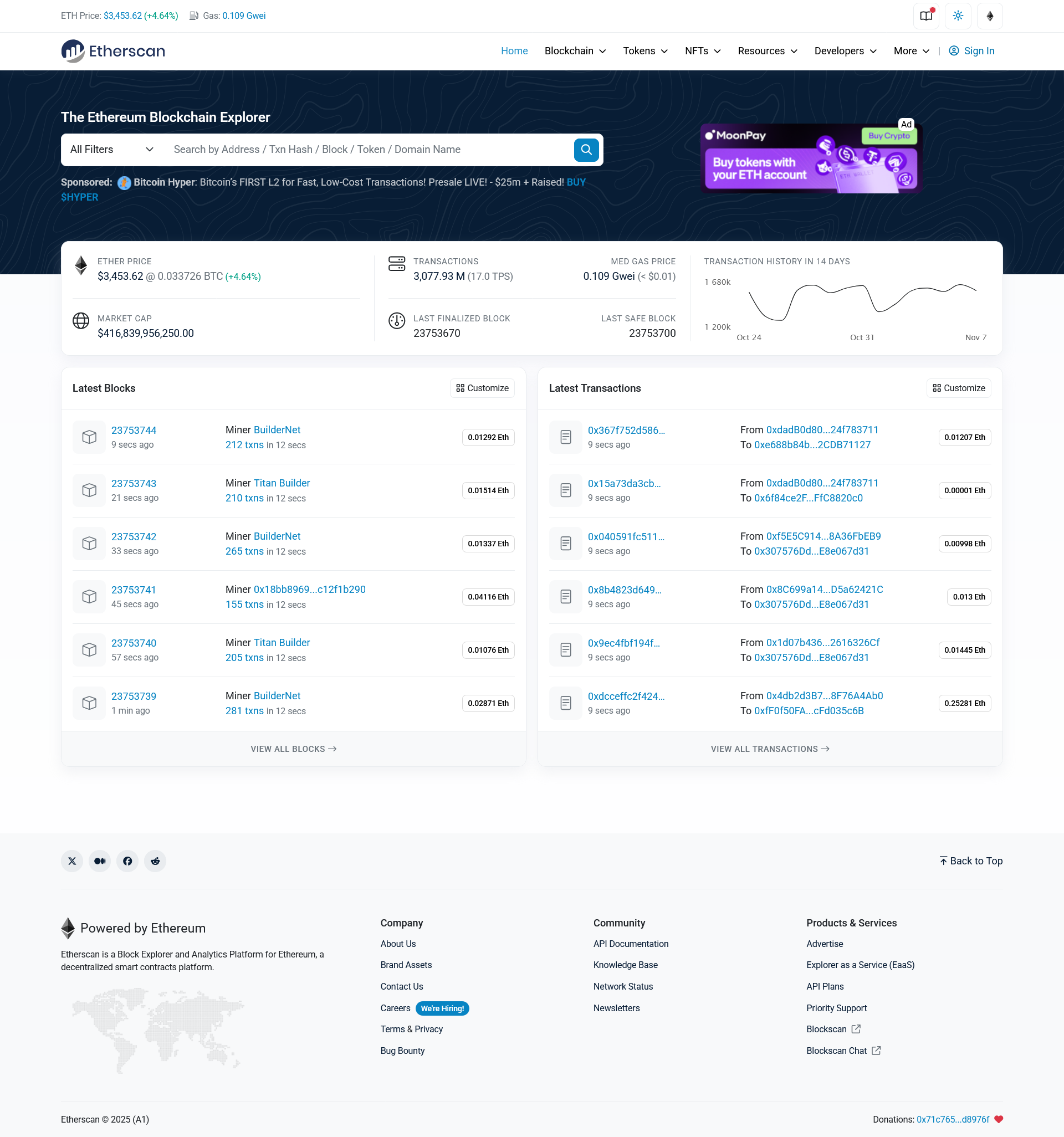
Etherscan: The Essential Blockchain Explorer for Ethereum :-
Etherscan has become one of the most important tools in the Ethereum ecosystem. Whether you are a crypto investor, blockchain developer, NFT collector, or simply curious about decentralized technology, Etherscan provides a transparent window into everything happening on the Ethereum blockchain. From tracking wallet balances to verifying smart contracts, the platform plays a critical role in helping users understand and interact with blockchain data.
What Is Etherscan?
Etherscan is a blockchain explorer and analytics platform designed specifically for the Ethereum network. It allows users to search, verify, and monitor transactions, addresses, tokens, smart contracts, and other blockchain activities in real time.
Unlike a cryptocurrency wallet, Etherscan does not store digital assets. Instead, it acts as a search engine for blockchain data. Users can input a wallet address, transaction hash, or token name to retrieve detailed information directly from the Ethereum blockchain.
The platform was launched in 2015 and quickly became the most widely used Ethereum explorer because of its intuitive interface and comprehensive blockchain tools.
How Etherscan Works ;
Ethereum is a decentralized blockchain where every transaction is permanently recorded on a public ledger. Etherscan indexes this data and presents it in a readable format.
When users search for information, Etherscan queries the Ethereum blockchain and displays details such as:
. Transaction history , Gas fees , Wallet balances , Smart contract interactions
. Token transfers , NFT ownership , Block confirmations
This transparency is one of blockchain technology’s defining features. Every action on Ethereum can be independently verified using Etherscan.
Key Features of Etherscan :-
1. Transaction Tracking :-
One of the platform’s most popular functions is transaction tracking. Users can paste a transaction hash into the search bar to see:
. Sender and receiver addresses , Amount transferred , Gas used
. Timestamp , Transaction status , Block number
This feature is especially useful when confirming cryptocurrency payments or troubleshooting failed transactions.
2. Wallet Monitoring :-
Etherscan enables users to monitor Ethereum wallet addresses. By searching an address, users can view:
. ETH balance , Token holdings , Transaction history
. NFT assets , Smart contract interactions
Crypto traders and analysts often use this feature to follow large “whale” wallets and monitor market movements.
3. Smart Contract Verification :-
Smart contracts are self-executing programs deployed on Ethereum. Etherscan allows developers to verify smart contract source code publicly. v
Verified contracts improve transparency and trust because anyone can inspect the code and confirm its functionality.
This feature is widely used in decentralized finance (DeFi) projects and NFT marketplaces.
4. Gas Tracker :-
Ethereum transaction fees fluctuate depending on network congestion. Etherscan’s Gas Tracker helps users estimate appropriate gas fees for faster or cheaper transactions.
. Low, average, and high gas prices
. Estimated confirmation times
. Historical gas trends
This helps users optimize transaction costs.
5. Token and NFT Tracking :-
Etherscan supports ERC-20 tokens and ERC-721/ERC-1155 NFTs. Users can explore token supply, holders, transfers, and market activity.
NFT collectors frequently use the platform to verify ownership and inspect transfer history.
Why Etherscan Matters ;
Blockchain technology emphasizes transparency and decentralization. However, raw blockchain data can be difficult to interpret. Etherscan bridges this gap by making Ethereum data accessible to ordinary users.
. Enhancing trust through transparency
. Helping users verify transactions independently
. Supporting developers with smart contract tools
. Enabling blockchain research and analytics
. Improving security awareness
Without blockchain explorers like Etherscan, navigating Ethereum would be significantly more difficult.
Etherscan for Developers ;
Developers use Etherscan extensively for debugging and deployment. The platform provides:
. Smart contract verification tools
. API services
. Contract reading and writing interfaces
. Blockchain analytics
. Testnet explorers
The Etherscan API is particularly valuable because it enables developers to integrate blockchain data into decentralized applications (dApps), wallets, and analytics dashboards.
Security and Privacy Considerations ;
Although Ethereum addresses are pseudonymous, Etherscan makes blockchain activity publicly visible. This transparency has advantages and disadvantages.
Benefits:
. Easier fraud detection , Public accountability , Transaction verification
Challenges ;
. Reduced financial privacy , Wallet activity tracking , Exposure of large holdings
Users should understand that blockchain transactions are permanently visible once recorded.
The Future of Etherscan :-
As Ethereum continues evolving through scaling upgrades, Layer 2 networks, and decentralized applications, blockchain explorers will become even more important.
Etherscan is expanding support for:
. Layer 2 ecosystems
. Cross-chain analytics
. Advanced blockchain monitoring
. Developer infrastructure
. Enhanced analytics tools
The growing adoption of Web3 technologies ensures that platforms like Etherscan will remain central to blockchain transparency and usability.
Conclusion ;
Etherscan is far more than a transaction viewer. It is a foundational tool for navigating the Ethereum blockchain. By providing real-time access to blockchain data, smart contracts, wallet activity, and token transfers, Etherscan empowers users with transparency and insight.
For beginners, it offers a simple way to understand blockchain activity. For developers and analysts, it provides powerful tools for research, verification, and application development. As Ethereum and decentralized technologies continue expanding, Etherscan will likely remain an indispensable part of the blockchain ecosystem.